Pretty clever mix of slasher and rom-com tropes that, while not a game changer to any degree, is novel enough to help keep the slasher genre going another decade. Slasher films in recent years have been moving more towards comedy than ever before. Post-Scream (1996), these movies were almost always ironic or self-aware to some degree, the genre having been forced to grow up and start churning out slicker, better-made content than the exploitation trash that gave it its start in the Golden Age. Now that we’re post-post-Scream, though – maybe even post-post-post – the Dead Teenager (or young person) flick has become almost cosy, something you’d bring a date to, and not just to cop a feel when they bury their face in your chest during a scary bit.
The real cleverness here is that this is genuinely just as much a rom-com as a slasher, and starts out neatly parodying the proposal scene from countless date movies, right down to the vomitous Hallmark/Netflix-original lighting. No slasher prologue has ever come close to the wit and suspense of the original Scream’s (controversial statement?) – the whole Scream franchise’s success is based arguably in part on its cold opens – but Love Hurts’ captures something of the same genre deconstruction. And features a nifty new way to use a wine press.
The structure of the film as a whole is derived from the romantic comedy, starting after the prologue with a Meet Cute between our boy and girl, two advertising creatives who bond over a shared coffee order. But she’s given up on romance and is such a klutz she headbutts him twice! And he’s a smooth talker with big dreamy eyes and such a strong manly bosom…
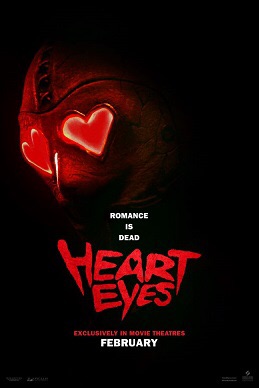
You can see how this could have been a ‘90s or ‘00s release with Meg Ryan or Brittany Murphy as the heroine. However, the romance is paused when the two of them are targeted by Heart Eyes, a killer who stalks and kills couples in different cities on Valentine’s Day.
The kills are sufficiently gory, providing ample fodder for “Kill Count” videos on YouTube, like Dead Meat. (I think I can already tell which kill is going to win his coveted Golden Chainsaw.) It’s funny how even the murders in these movies have become cosy. In real life murder is a terrible thing, and would leave behind it in the case of this film’s killer so much grief and agony, young lives lost to needless violence. But a genre film like this is essentially a mental playground, and the deaths leave as little impact in the long run as all of the lords and ladies killed in stately homes in Golden Age crime fiction.
I will say the film takes place in that alternative reality common to popular thrillers where, for example, a serial killer can walk into a city PD in the modern day and kill the desk sergeant and seemingly two detectives without alerting every police officer within a thousand-mile radius. I’m not sure if inner-city precincts in the US are at any point manned by just three staff, but they’re especially not when it seems like they’ve just caught a high-profile serial killer. I guess you could explain the lack of security cameras by arguing that the killer is tech-savvy and disabled them, just as they shut off the lights for some murder-in-the-dark scares. But come on. The jailhouse assault by one guy is a cliche that’s useful in Westerns set in the bum crack of nowhere in 1860, not so much a story in Seattle in 2025.
Like how, as much as I loved the finale in a rundown church on a dark and stormy night… how many of those would you find in this setting? And all those candles just seem like a logistical nightmare.
I say these things like criticisms but in a way, they’re baked into what the movie is and make it the fun and silly ride that it’s trying to be.
Rating: 3/4
 I Just Saw
Leave a comment