
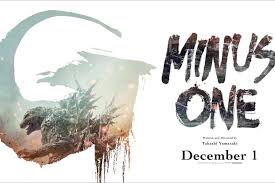
I just saw Godzilla Minus One and it was good. Easily the best kaiju movie that I’ve seen in a long time; mostly the ones I’ve seen have been American takes on the genre. The one I grew up with was the 1998 Roland Emmerich disaster porno, Godzilla, which I mainly remember for all the scenes set at night in the rain to obscure the dinosaur model, dull humour, and breathtakingly stupid physics. (The still-erect skyscraper with a hole in the middle, like the painted sheet that a football mascot jumps through, being of special idiocy; is now a good time to mention that director Roland Emmerich also believes in the conspiracist “Shakespeare authorship question”?)
Minus One, by contrast, avoids large-scale popcorn nonsense to combine the Godzilla mythos with a sensitive war drama set in the shadow of the 1946 bombing of Tokyo. I was kind of taken aback by how earnest its characterisation and storytelling were. None of it’s particularly complex or deep, it’s about on the level of a war film meant to play to communal sentiment, but it’s careful and often touching.
Ryunosuke Kamiki plays Kōichi Shikishima, a failed kamikaze pilot whose parents’ plea to “come home alive” trumps his military orders to “die with honour” and maybe weaken the opposing side’s advance a little in the process. He arrives on Odo Island, an engineering outpost, which in the prologue is attacked by Godzilla, leaving only him and one other survivor. Returning home, he finds his family gone and his neighbour bitter about his supposed failure to save her children from the bombing. He reluctantly develops a found family in Noriko Ōishi (Minami Hamabe) and an orphan she’s taken charge of, before finding work destroying US mines at sea. But then from the depths Godzilla returns.
The setting and milieu reminded me somewhat of Michael Bay’s Pearl Harbour (2001), another historically war-based special effects film, except that Godzilla Minus One is a thousand times more sensitive and intelligent in its portrayal of the ordinary citizens affected by war. Aspects of the plot were slightly confusing to me. For example, why would a kamikaze pilot’s parents not expect that he wouldn’t be coming home? As the third act kicks into gear there’s a plot point concerning how the military can’t just destroy Godzilla with warheads in case this provokes US-Soviet tensions; but wouldn’t the emergence of a prehistoric mammal, previously unknown to science and with huge destructive capabilities, be regarded by the world as a bit more than a local problem?
These are just niggles, however, and probably in large part based on my ignorance of the specific cultural history surrounding certain concepts. When it arrives, the creature is spectacular, as is the havoc it wreaks. The film comes alive in the action scenes involving it. Godzilla still moves and is rendered with a certain faltering hokiness, which is undoubtedly part of the charm if you enjoy kaiju movies, but otherwise, it is generated with a care and attention to detail that pulls the story together.
Rating: 3/4
 I Just Saw
Leave a comment